



History
The history of Dominik Čipera’s villa
21. 9. 1939
Building permit for the villa
1939–1942
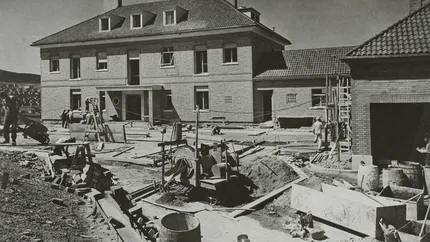
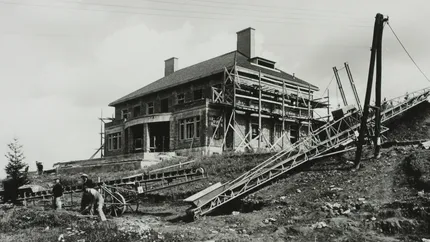
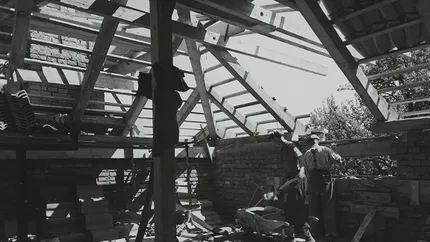
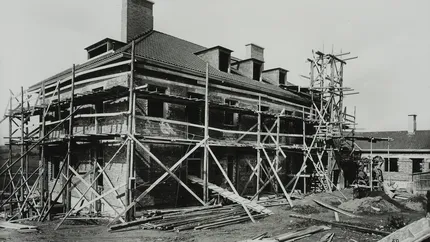
Construction of the villa and the house of the caretaker & gardener (completed in 1941)
26. 9. 1945
The Čiperas put the villa together with the land and the gardener’s house at the disposal of the Baťa Relief Fund.
12. 12. 1947
The Čiperas were forced to donate the property to the Baťa Relief Fund for child care on the condition that the villa would be used for the benefit of children in the future. The undervalued price of the donated property was set at 340,000 Czech crowns.
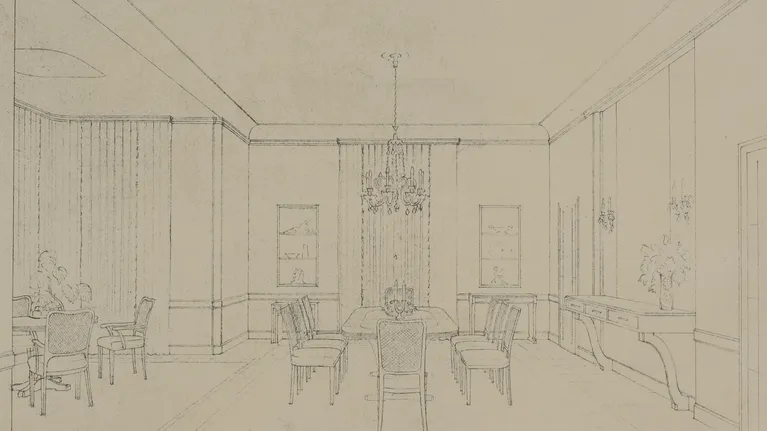
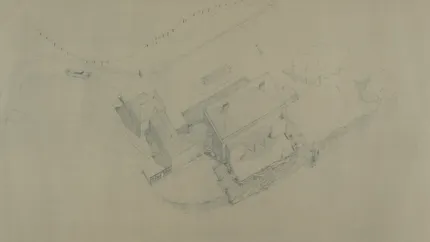
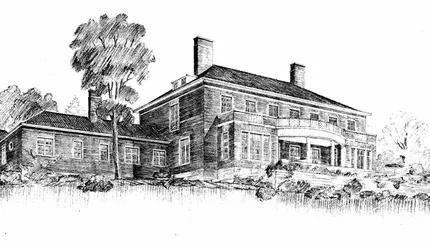
Vladimír Karfík, black-and-white drawing of the interior of the Čipera Villa, 1939–1941, source: MuMB
Construction and life
As the threat to the republic grew in the years leading up to 1939, the Baťa directors decided to invest their means into developing their own residences. They purchased plots of land in what was then the outskirts of Zlín, and the company’s architect at the time, Vladimír Karfík was commissioned to design their villas. Dominik Čipera purchased a plot of land from the city on a west-facing slope in what is now the Burešov district. It covered an area of over eight hectares and included part of the forest on Šesták Hill. The building permit was issued in 1939.
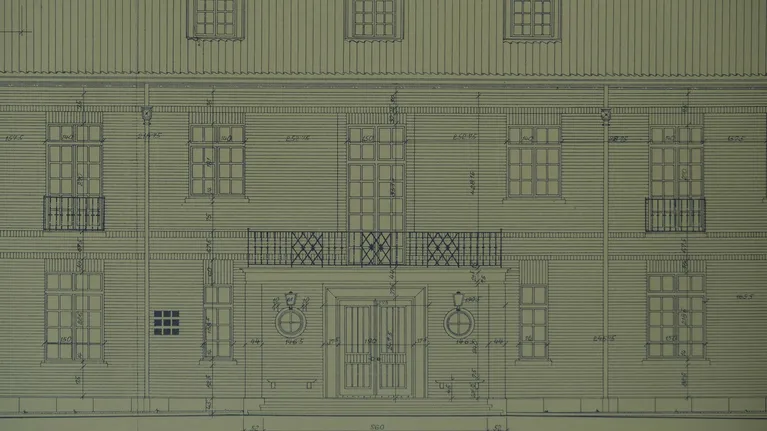
Karfík’s plans are dated December 1940, but the main building was not completed until 1942.
Layout of the villa
The villa faces east with its main facade. It consists of first floor, second floor, attic (third floor), and semi-open basement (ground floor seen from the west). Sculpturally structured parts project from the floor plan. It is arranged around a central two-story staircase hall, which on the first floor leads to three formal rooms interconnected by sliding doors. This principle is repeated in Karfík’s directors’ villas with various variations. The children’s and parents’ bedrooms are on the second floor. The main wing measures 25 × 13 meters, excluding the terraces. A single-story utility wing with garages is attached to the northeast corner, forming a courtyard which serves as the entrance area. The villa is accessed from the courtyard through an entrance portico flanked with stone benches, covered by a small terrace. It opens into a spacious two-story entrance hall with an open staircase, leading to a social salon with a large dining room on one side and a living room on the other. Facing the eastern facade used to be the study and kitchen with a preparation room and a pantry, connected to the one-story utility wing. The second floor of the villa had a central hall leading to a corridor, from which one could enter the bedrooms with dressing rooms, a boudoir, a guest room, and a study. To the west, along the entire length of the facade, there was a terrace above the rooms on the first floor. In the attic under the roof, there were rooms for maids and storage rooms. In the basement (ground floor), in addition to utility rooms and a boiler room, there was also a gym from which one could go directly to the garden and a small swimming pool.
Typical Zlín-style brickwork was used as a decorative element in the construction, along with white cornices and lintels.
Children’s home and reconstruction
1948–2024
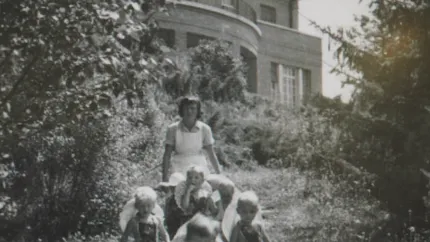
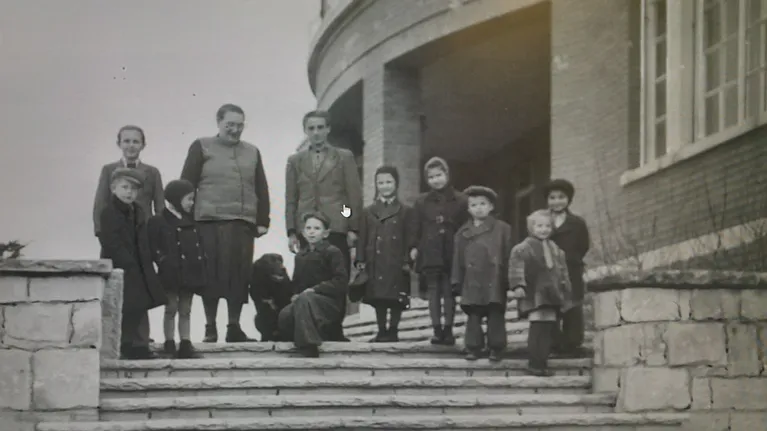
For many decades, the villa served as a children’s home.
1950s
An open vestibule was added to the utility wing, which was later converted into an enclosed space.
1980s
Part of the land was taken for the construction of an old people’s home.
1990
A bronze plaque with the following inscription was placed on the villa: “Donated to the Baťa Relief Fund for child care by Dominik and Božena Čipera. Zlín, 12 December 1947.”
1990s
Major changes were made – the garage at the end of the utility wing was demolished and a new, freestanding garage was built, and the terrace on the second floor was covered with a roof.
1993–1994
A number of original exterior and interior features were restored.
199x–199x
Modifications were made to part of the park, including the construction of a shed for toys and the refurbishment of the original windows and exterior shutters.
30. 10. 1995
The villa was nominated for registration in the Central List of Cultural Monuments of the Czech Republic.
26. 3. 2002
The villa was registered in the Central List of Cultural Monuments of the Czech Republic.
1985–2024
In addition to the children’s home, the villa also hosted the headquarters of the Center for Disabled and Endangered Children – today the Zlín Children’s Center.
2024–2025
Reconstruction and renovation of the villa to serve as the Zlín Region’s Cultural and Creative Center at the Čipera Villa.
Children’s home
The Čipera family did not live in the comfortable villa for long. On 26 September 1945, the Čiperas were forced to put the villa together with the land and the gardener’s house at the disposal of the Baťa Relief Fund, and in 1947 they had to donate it to it. The undervalued price of the donated property was set at 340,000 Czech crowns.
Terms of the donation agreement:
- The caretaker and the tenant of the garden, who live in the house at the entrance, will be provided with replacement apartments.
- A bronze plaque with the inscription “Donated to the Baťa Relief Fund for child care by Dominik and Božena Čipera. Zlín, 12 December 1947” is to be placed on the house No. 3674, so that the property may be used for the social purposes of the Zlín region and its population.
Zlín Region’s Cultural and Creative Center at the Čipera Villa
The entire grounds of the Čipera Villa, including the park, the garden, and the gardener’s house, are used for the activities of the Zlín Region’s Cultural and Creative Center at the Čipera Villa.
In addition to the permanent exhibition, which is curated by the Regional Gallery of Fine Arts and focuses on the history of the villa and the people associated with it, the villa provides the necessary space and facilities for creative studios as well as two representative halls that expand the city’s social spaces.
Historical photographs