



Dominik Čipera
Milestones in the life of Dominik Čipera
3. 8. 1893
Dominik Čipera was born in the Prague district of Královské Vinohrady.
1908
He studied at a Czech high school (Realschule) in Prague’s New Town, from where he transferred to the second year of the Czechoslovak Business Academy in Prague.
1911
He worked for the Prague Credit Bank, where he quickly rose through the ranks, becoming head of the accounting department at its branch in Lviv. There he met Božena Klausová, Tomáš Baťa’s half-niece. Later, they got married.
1. 11. 1919
Čipera joined the Baťa Company in Zlín as head of accounting.
1925
As the key person of Tomáš Baťa’s company, he was made the sole authorized representative with full legal power (Prokurist). Sons Jan (1921) and Pavel (1923) were born.
1919–1932
He became Tomáš Bata’s closest associate and played a fundamental role in creating a sophisticated system of modern management and organization of work in the factories.
1932–1945
After the tragic death of Tomáš Baťa on 12 July 1932, the importance of his role grew – Čipera became the Baťa Company’s general director and a member of its board of directors.
5. 8. 1932–12. 5. 1945
He was elected Mayor of Zlín, succeeding Tomáš Baťa, and remained in that position throughout the worst years of the war until 1945.
3. 9. 1932
He was elected chairman of the Zlín District Board of Mayors.
8. 11. 1932
He was elected chairman of the Zlín Regional Board.
1932–1945
Čipera held a number of public and honorary positions at both the local and national levels. He was a collector, patron, and prominent supporter of the arts, culture and education. Thanks to him, the Regional Gallery of Fine Arts in Zlín has acquired an interesting collection of artifacts.
1. 12. 1938
He served as Minister of Public Works in the Second Republic of Czechoslovakia (after the Munich Agreement) and subsequently in the Protectorate government of Rudolf Beran and Alois Eliáš until 1942; he was also vice-chairman of the Moravian Water Management Association, the Industrial Cooperation Club, and other organizations.
1938
Dominik Čipera was awarded honorary citizenship of the city of Zlín.
12. 5. 1945
Dominik Čipera was stripped of his position in the Baťa Company management and his post as Mayor. Along with others, he was falsely accused of collaboration and brought to trial where it was proven that, on the contrary, he had supported resistance movement from his own resources and had been active not only in Zlín and within the Protectorate of Bohemia and Moravia, but his initiatives extended as far as France, Switzerland, and Yugoslavia. This concerned not only financial or material aid, but primarily intelligence work.
1947
Čipera had to account for his activities in the government of General Alois Eliáš.
2. 5. 1947
Dominik Čipera was acquitted of all charges.
1948
Čipera faced re-arrest. Old charges were brought against him once more, and he was sentenced in absentia to 15 years of hard labor. He escaped imprisonment by fleeing to Canada together with his son Pavel, where they were later joined by his wife and son Jan.
1948–1963
Čipera worked with Tomáš Baťa Jr. in Canada at the headquarters of Baťa’s foreign subsidiaries.
3. 9. 1963
Dominik Čipera died in Trenton, Canada.
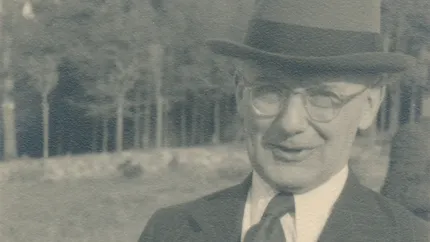
Dominik Čipera
Dominik Čipera was Tomáš Baťa’s closest associate. As the Zlín journalist Josef Vaňhara noted, Čipera was the real, though not official, general director of the company.
His father was a high school teacher, and he was the youngest of five children (his brother Prokop became the head of the Živnostenská banka). Čipera attended a Czech high school (Realschule) in Prague’s New Town, from where he transferred to the second year of the Czechoslovak Business Academy in Prague in 1908.
In 1911 he began to work at the Prague Credit Bank, quickly rising to the position of the head of accounting at the branch in Lviv. There he made the acquaintance of Božena Klausová, Tomáš Baťa’s niece. When he went to introduce himself to her family, he made such a good impression with his knowledge and ability that eventually, after some persuasion he handed in his resignation at the bank and, on 1 November 1919, took up the job as head of accounting at the Baťa Company. Their wedding was postponed, however, until he had discharged his many tasks at the company.
In 1925 he was made Tomáš Baťa’s sole authorized representative with full legal power (Prokurist). Many of the company decisions, and not only in financial matters, were due to his quiet, systematic hard work, deliberate inconspicuousness, and all-round inventiveness. He was, for instance, behind the decision to build little semi-detached houses for employees that gave their inhabitants the feeling both of having an individual home and of being part of the Baťa Company.
Work with Tomáš Baťa came to be based on a kind of mutual understanding – Čipera said that he was never actually ordered to do any particular job. The fact that they worked well together demonstrates that Tomáš Baťa had an excellent sense for finding co-workers. Čipera probably came up with the approach for the unusual, yet legal, cash flows of the Baťa Company (in particular the Baťa Relief Fund), which served the development of the town and its inhabitants, predominantly their employees.
After the death of Tomáš Baťa, Jan Antonín Baťa immediately began to secure the company and his family financially. Before the will was read there was even some talk about Čipera succeeding Tomáš. Together with Hugo Vavrečka, Čipera became a member of the “triumvirate” of directors, and in this capacity was able to fix some of the steps taken by Jan Antonín Baťa, while remaining true to himself and the company. The impulsive, energetic, and somewhat megalomaniacal Jan Antonín Baťa found in the sober and perhaps too curt Čipera a source of stability for himself and the company.
With the death of Tomáš Baťa the office of the Mayor of Zlín also became vacant. Čipera was elected to the position on 5 August 1932 and remained in this office throughout the worst years of the war until 12 May 1945. Soon, on 3 September 1932, he was also elected chairman of the Zlín District Board of Mayors. From this office he made a considerable contribution to the preparation and establishment of the Zlín Regional Board, and at its constituent meeting, on 8 November 1936, he was made its chairman. The aim of the Zlín Regional Board was the general development of the broader region of southeast Moravia, comprising twelve districts, with Zlín as its natural center. As early as during the preparatory work leading up to its founding, and mainly as long as the board was operating freely, Čipera generally contributed to the improvement of the whole region. Also, while he was Mayor, Greater Zlín was formed by the incorporation of the neighboring towns and villages. The built-up area was systematically changed into a garden city. The construction of public buildings, particularly schools, also continued. A comprehensive system of education, with language instruction at all levels, was established.
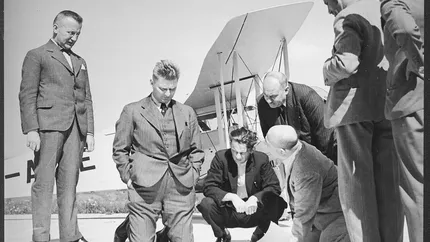
Just as for Tomáš Baťa, so too for Čipera the development of the town was closely linked with the development of the company. Čipera made sure to honor the legacy of the company’s founder, which he saw as being chiefly in innovation and the support of progress. After the tragic death of Tomáš Baťa, Čipera by personal example restored confidence in flying (and thereby also the nascent production of aircraft). He was concerned with education, and placed emphasis on the training of employees, particularly in customer relations. He successfully pushed for the expansion of the services provided by Baťa stores (for instance pedicures, shoe repair, and shoe polishing). He was personally involved in the teaching of etiquette at the Baťa Young Men’s School, and was present at the founding of the School of Arts and the Film Studios. With Čipera as its Patron, the Film Harvests were held in Zlín in 1940, a festival of Czech film to which important people in the film industry were invited as guests.
Čipera soon found himself in yet another difficult role. On 1 December 1938, a couple of months after the Munich Agreement, he was made Minister of Public Works. In the rump Czechoslovakia his task was to find a solution to the problems in transport and energy and, if possible, to eliminate the deficit from state orders. Under his direction important stretches of the Rivers Elbe and Vltava were made navigable. With the resignation of the government in January 1942, this stage in his life also came to a close. After returning to Zlín, Čipera devoted himself with even greater application
to his dual task in the Baťa Company and at City Hall. In an important way he supported the work of the Allies, particularly the Czech resistance movement, the Slovak National Uprising, and the partisan movement. The period of the Second World War, when his villa was being built, was a time of extraordinary trials for Director Čipera. Despite Čipera’s indisputable contributions to the development of Zlín and the entire country, after the war the communists stripped him of all his positions, accused him of collaboration, briefly imprisoned him, and brought him before the National Court.
The prosecution could not, however, prove the accusation. On the contrary, Čipera’s effective, clandestine support to those in need came to light, and the testimonies led to his acquittal. However, this did not spare Čipera’s family from communist persecution. All the same, the management that was imposed on the company by the state forced him to quit. He moved to Prague and then, in 1948, succeeded in leaving the country in time. He settled in Canada where he would soon work with Tomáš Baťa Jr.
Author: Ladislava Horňáková, curator of the architecture collection of the Regional Gallery of Fine Arts in Zlín
Historical photographs